Pivot Table
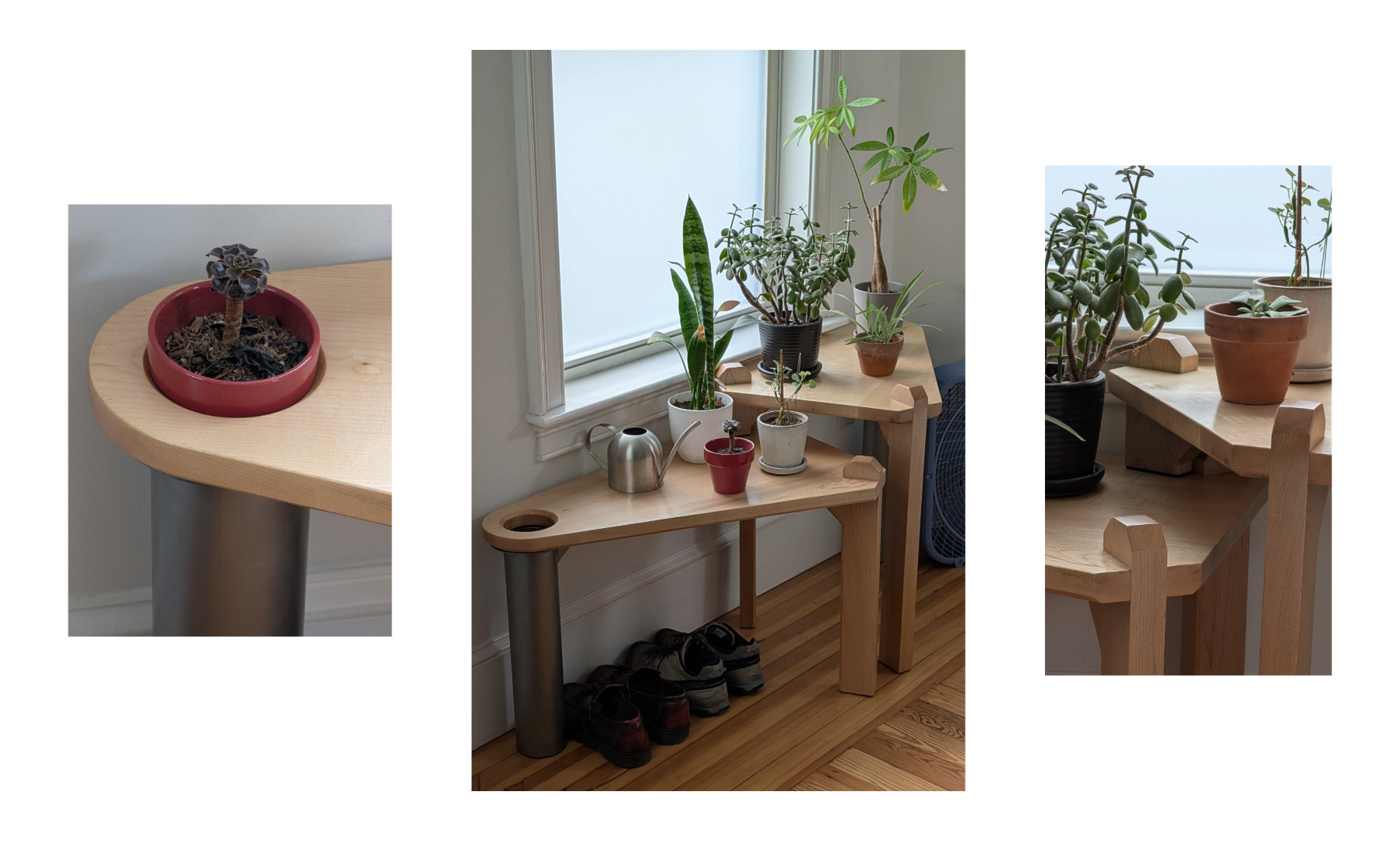
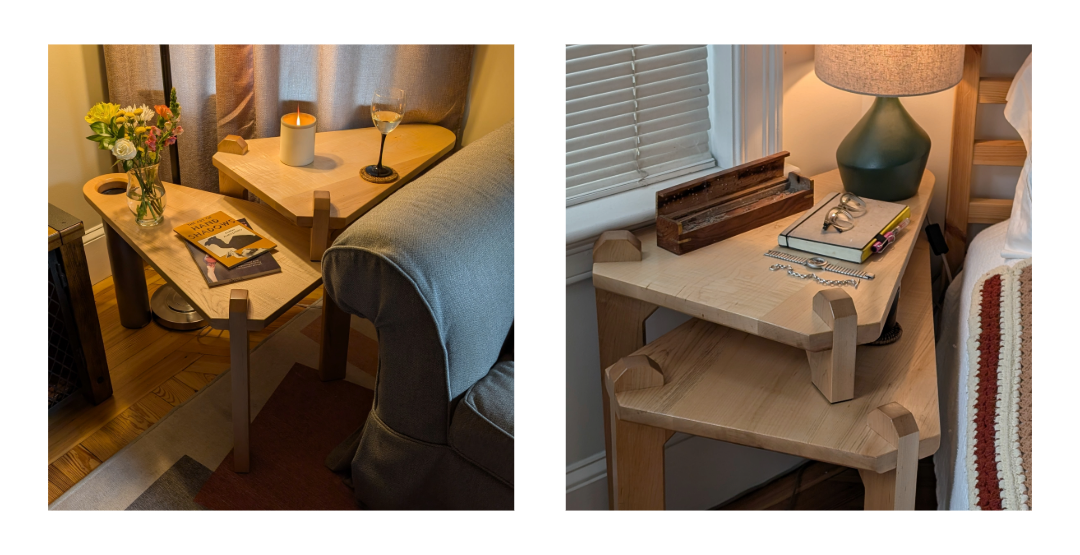
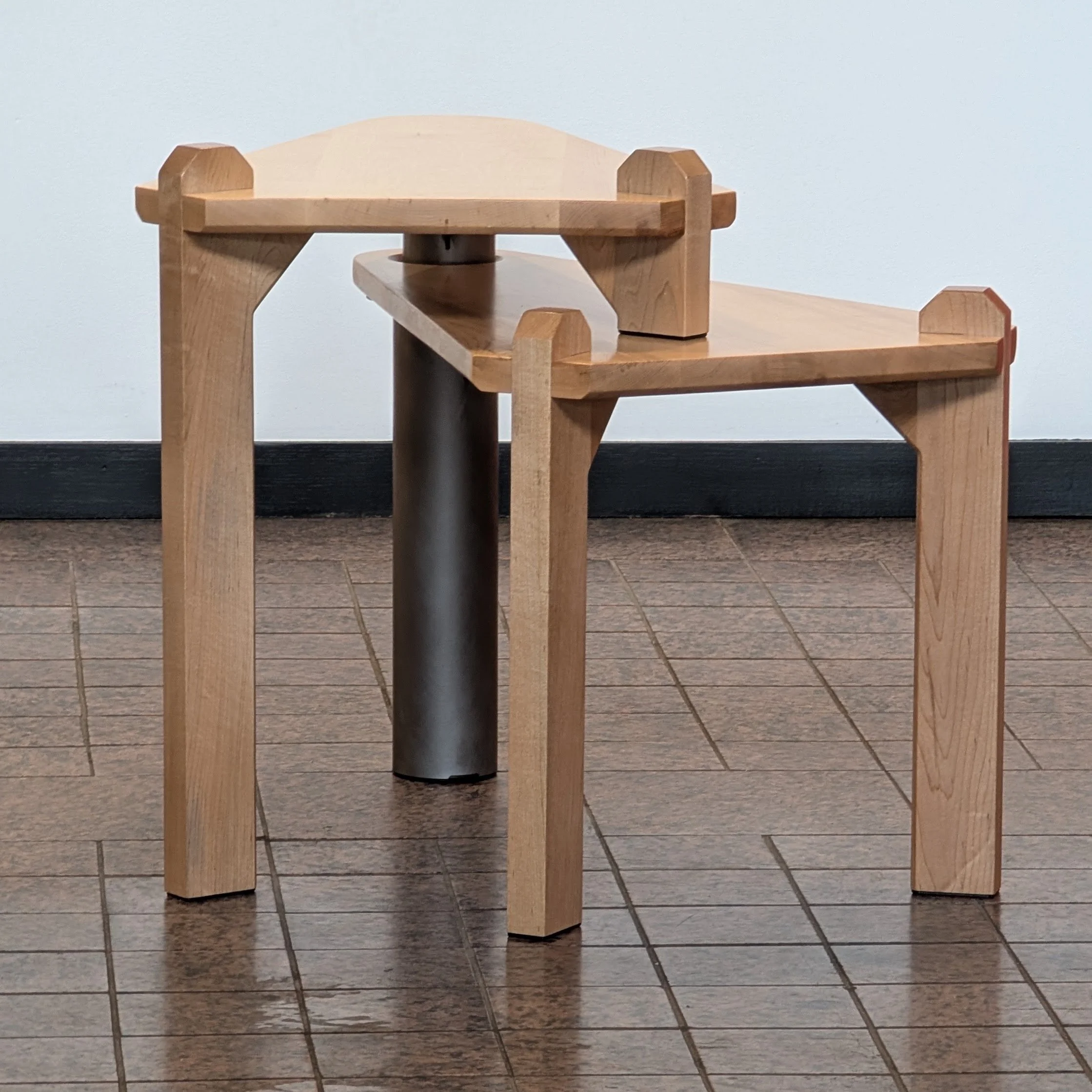
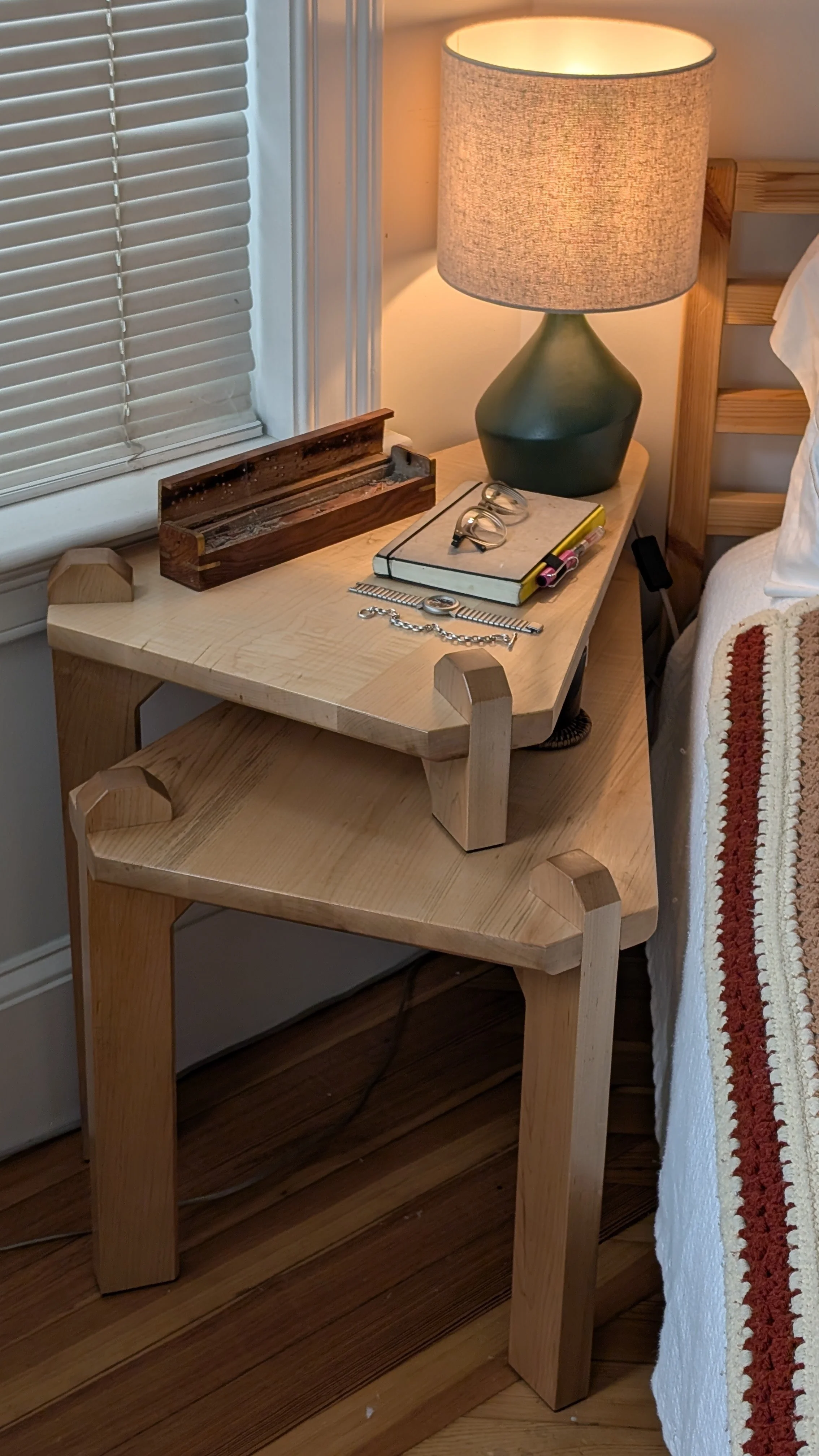
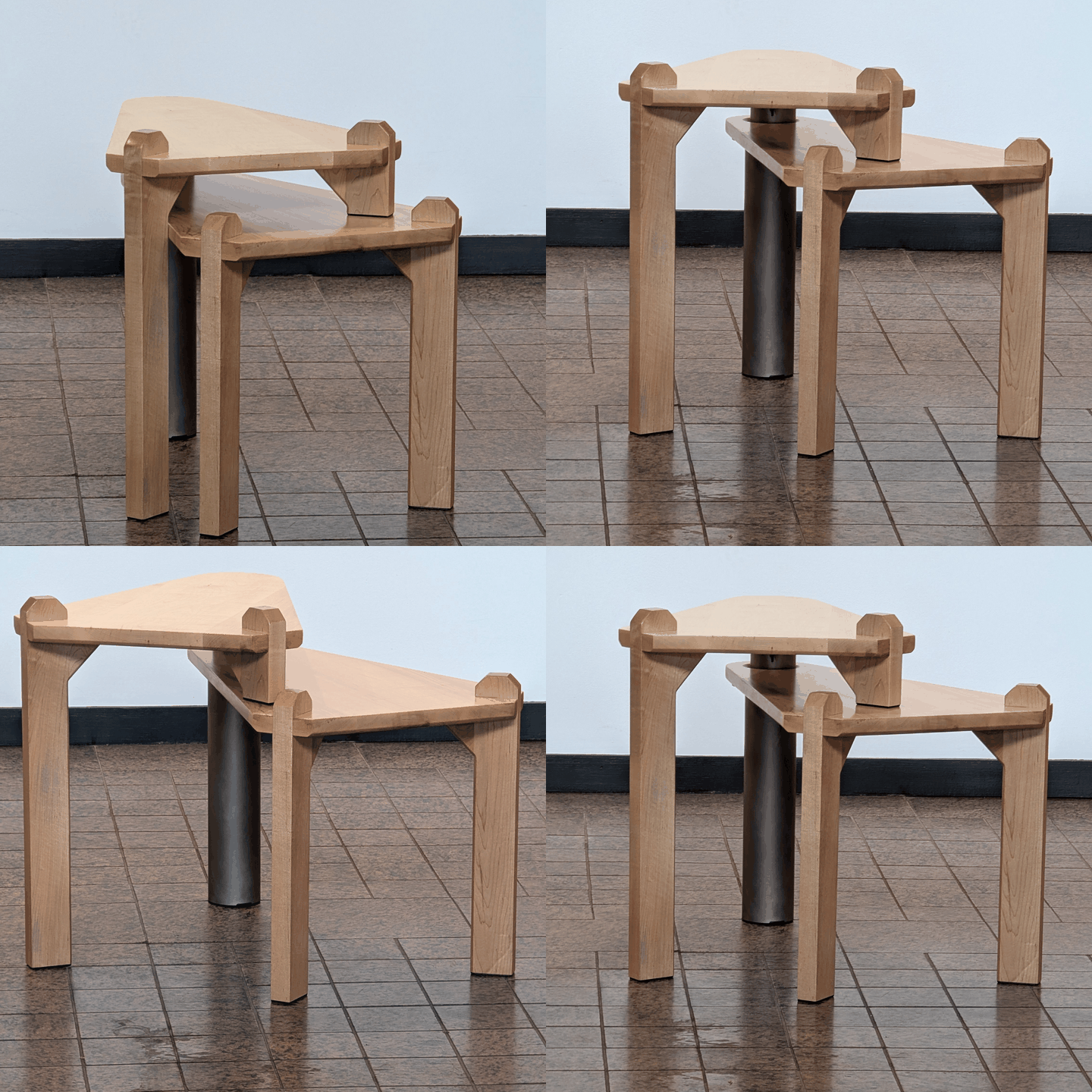
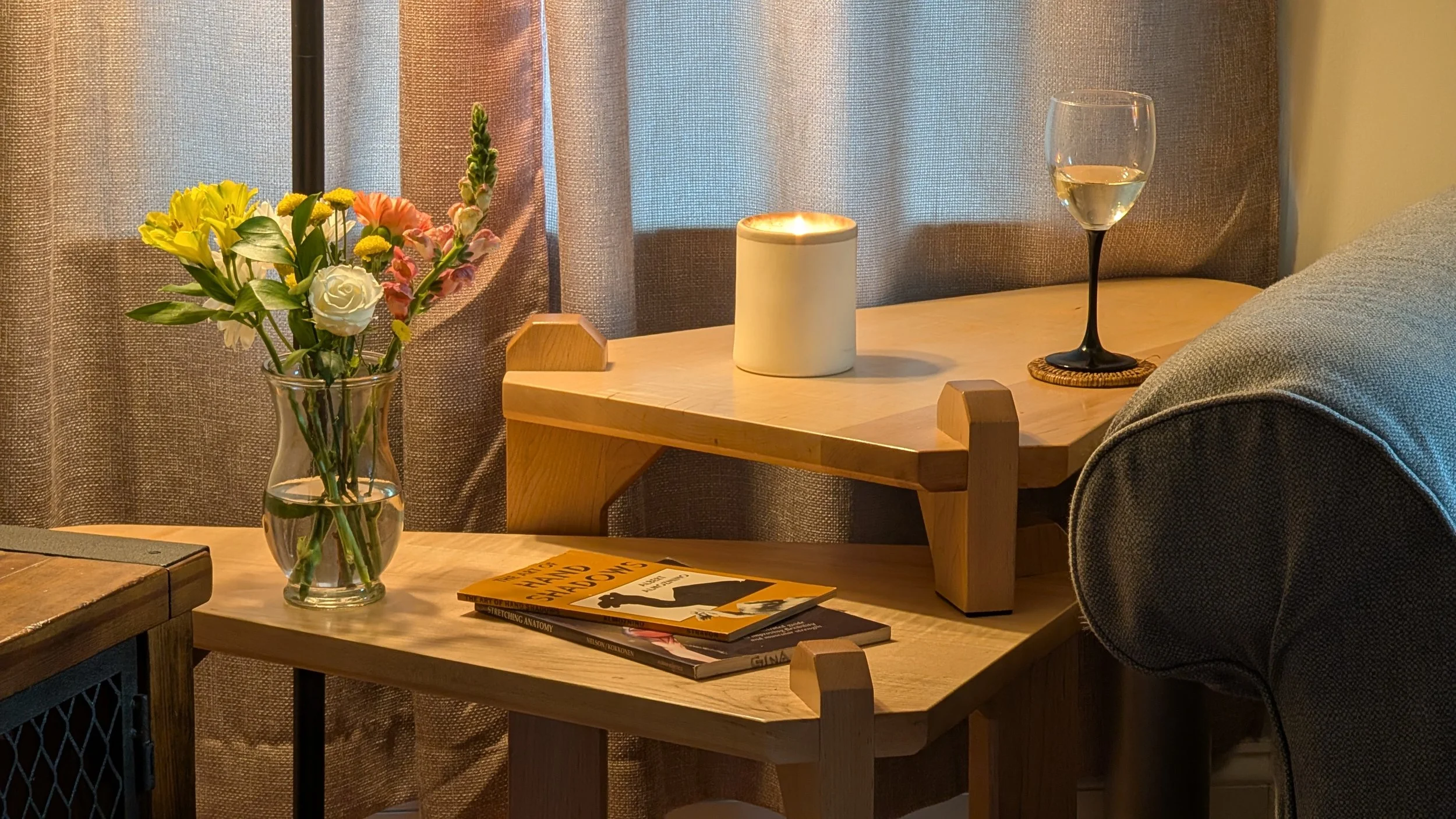
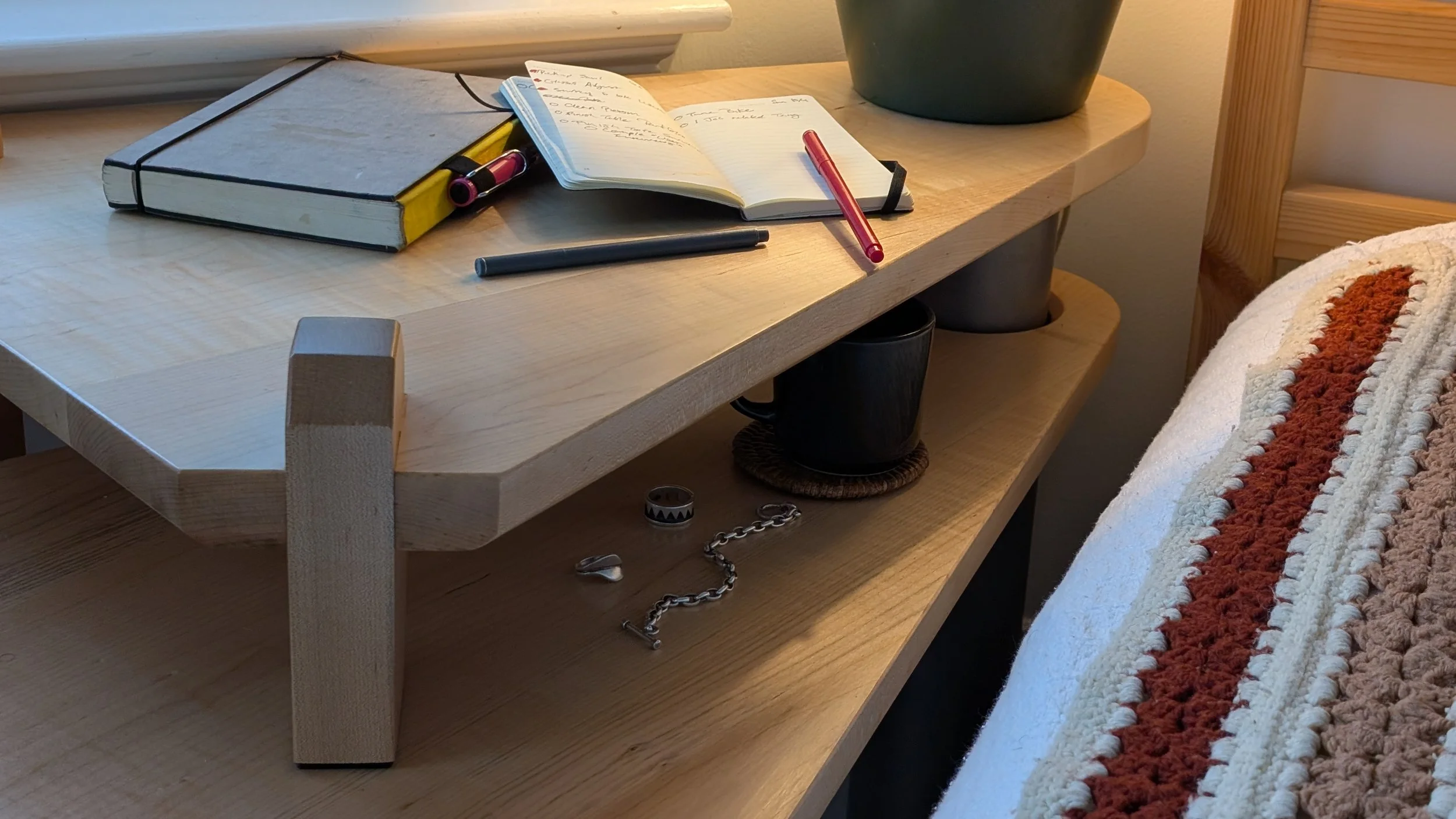
Pivot table is a two-tiered bedside or accent table designed to fit awkward angles. It playfully arranges to fit a multitude of spaces. It features classic wood construction with large steel legs in the back, highlighting the tables functionality while providing the strength necessary
Pivot table was made possible through Boston University’s Engineering Student Innovation Fund
Problem Statement &
Inspiration
Townhouses across the Greater Boston Area proudly feature bay windows. These spaces that acted as parlors and dining rooms have since been converted to bedrooms creating awkward dead spaces that standard furniture can’t elegantly fill.
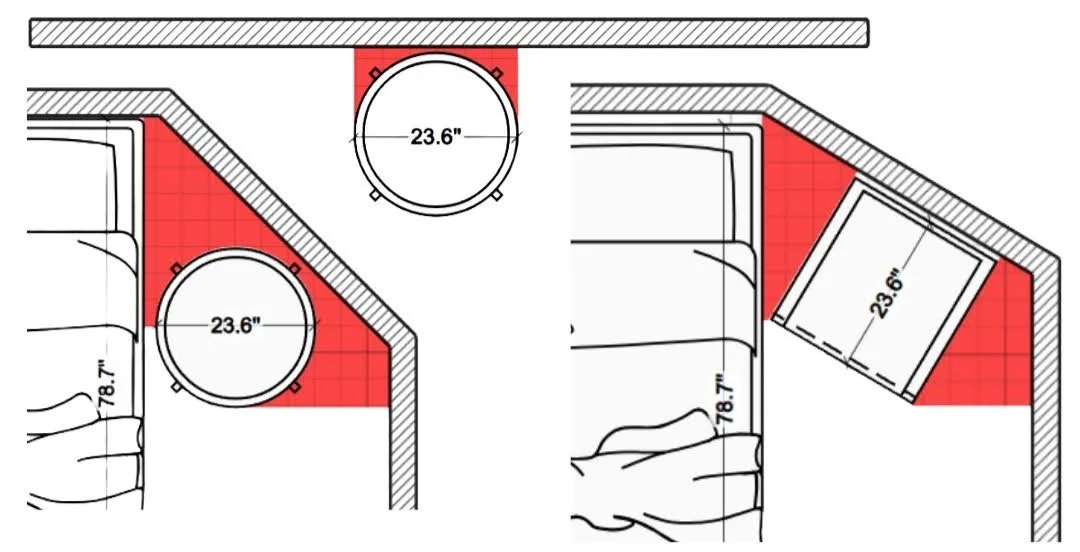
The bay window space in my current apartment, the original inspiration for pivot table
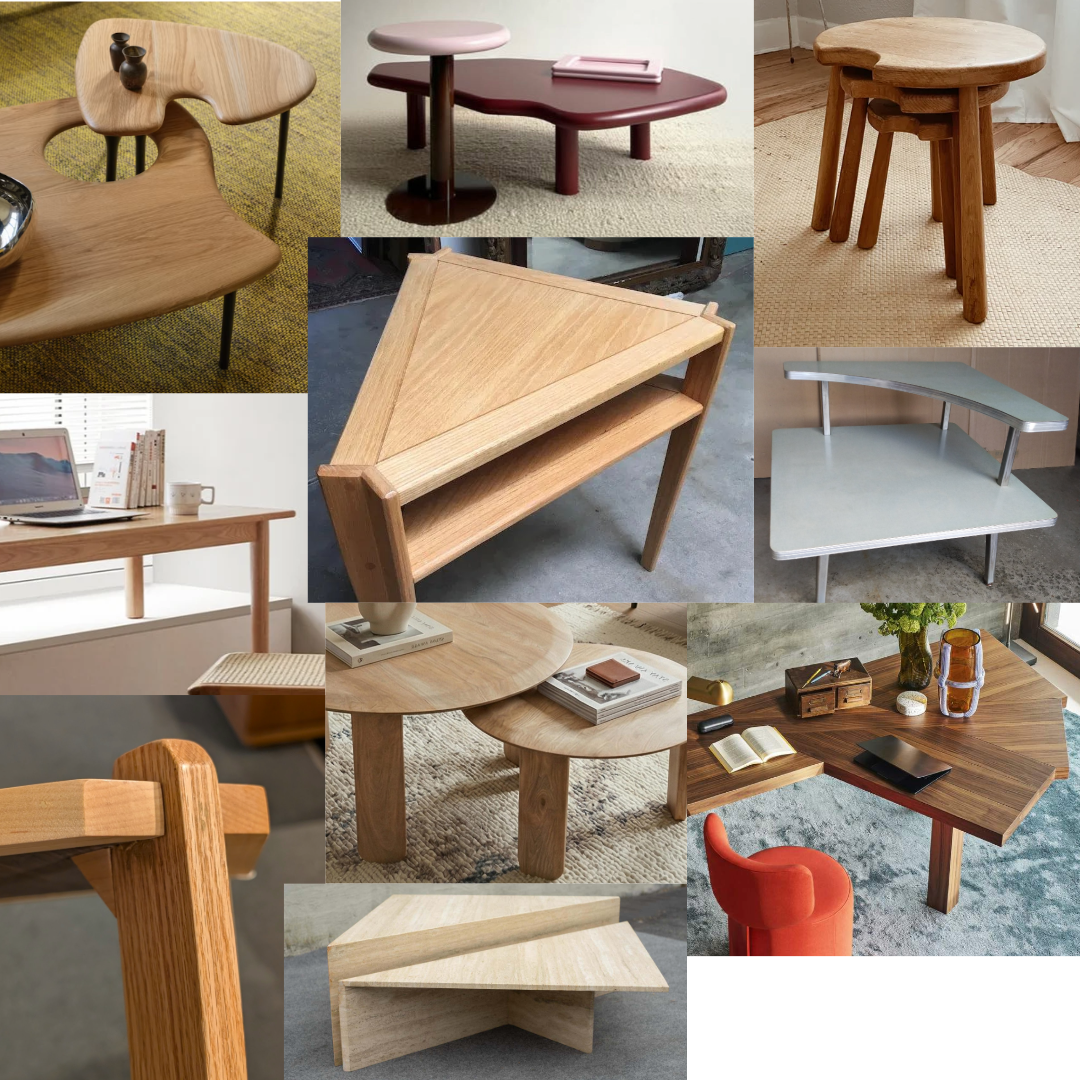
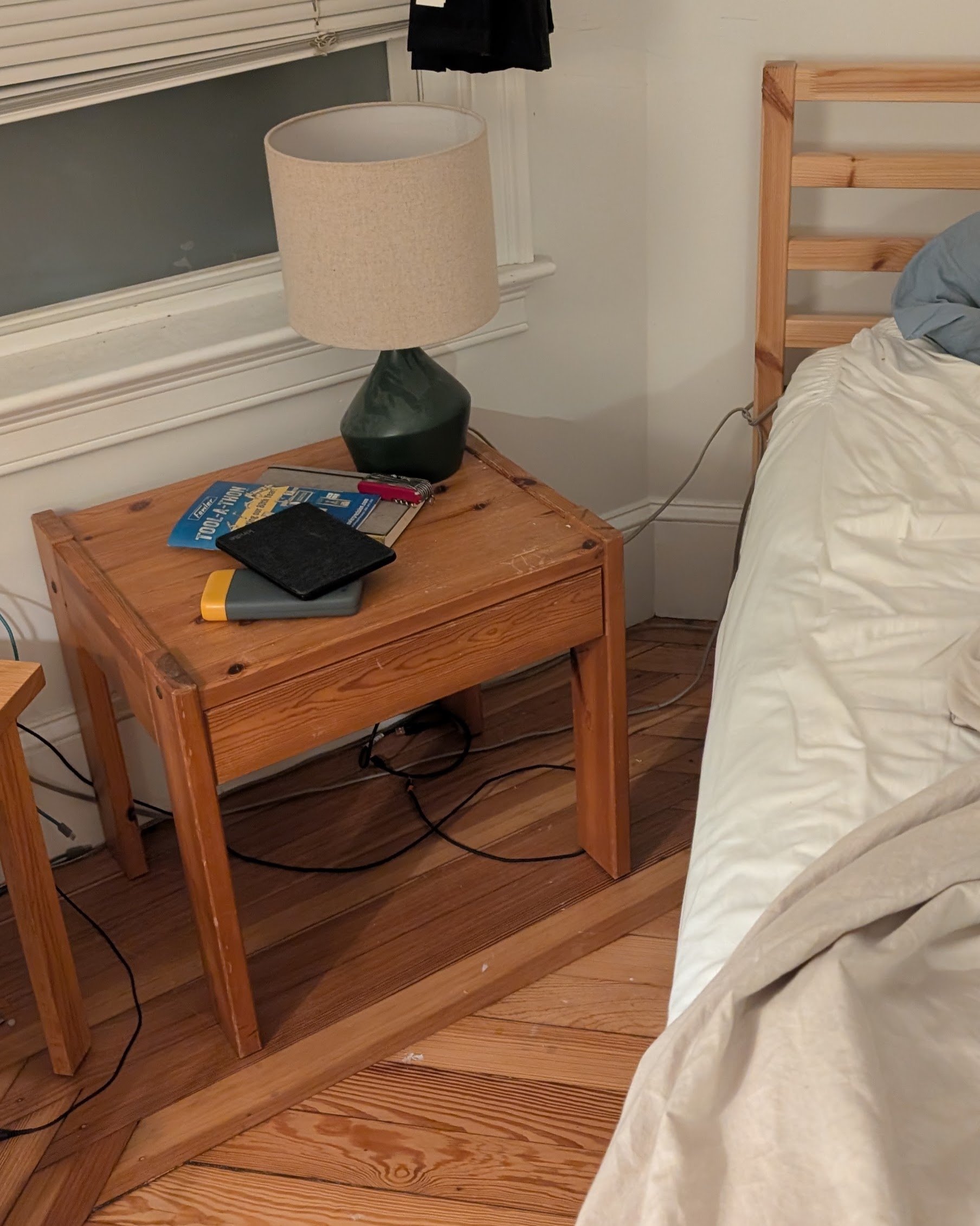
Some of the inspiration during the design process
Prototyping and Ideation
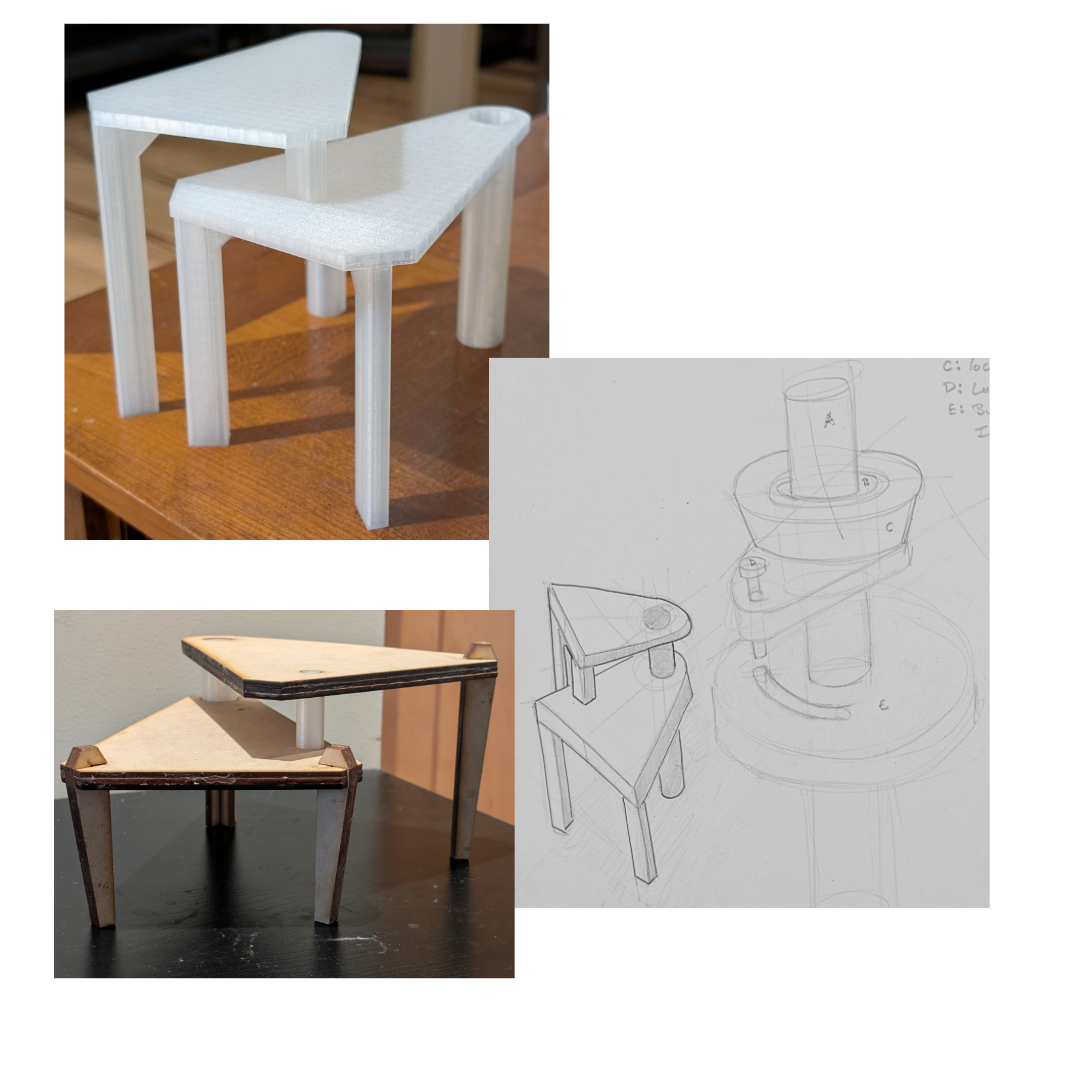
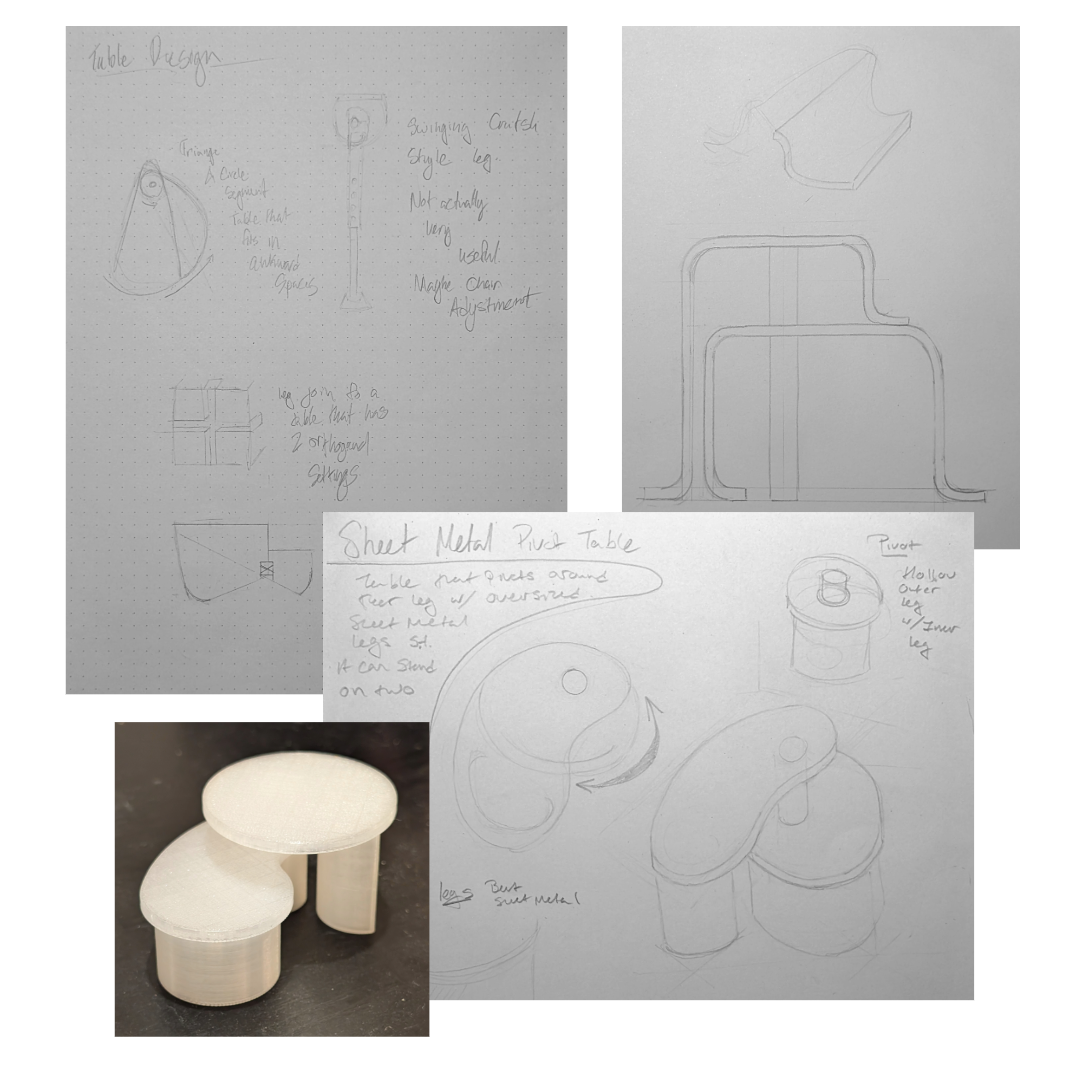
Several ideas were explored including a metal kidney shaped table and curved veneer two-piece table.
The triangle table was chosen for its versatility and ease of manufacturing. The original had a locking mechanism which later transformed into two nested tables with a pass-through hole
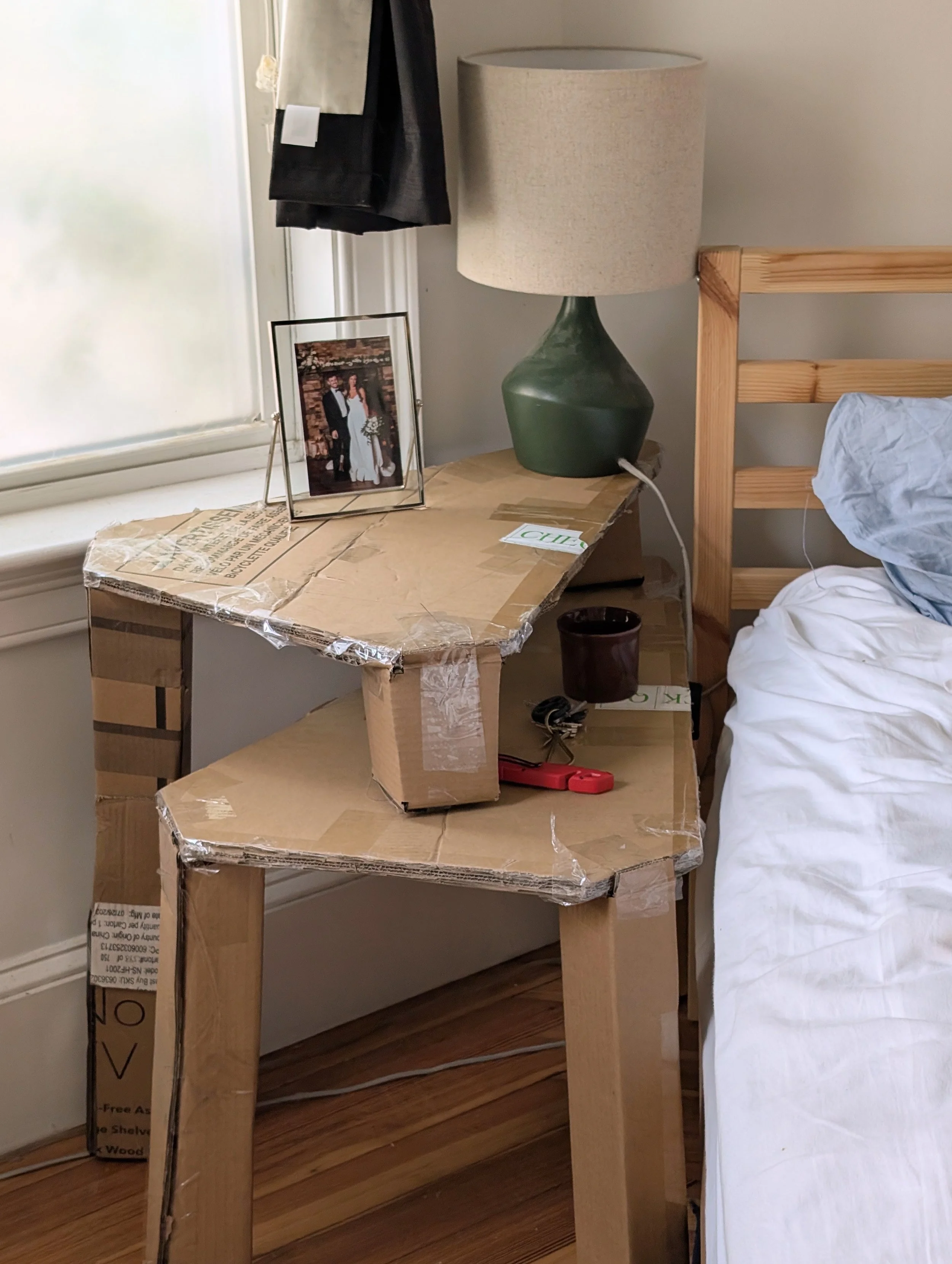
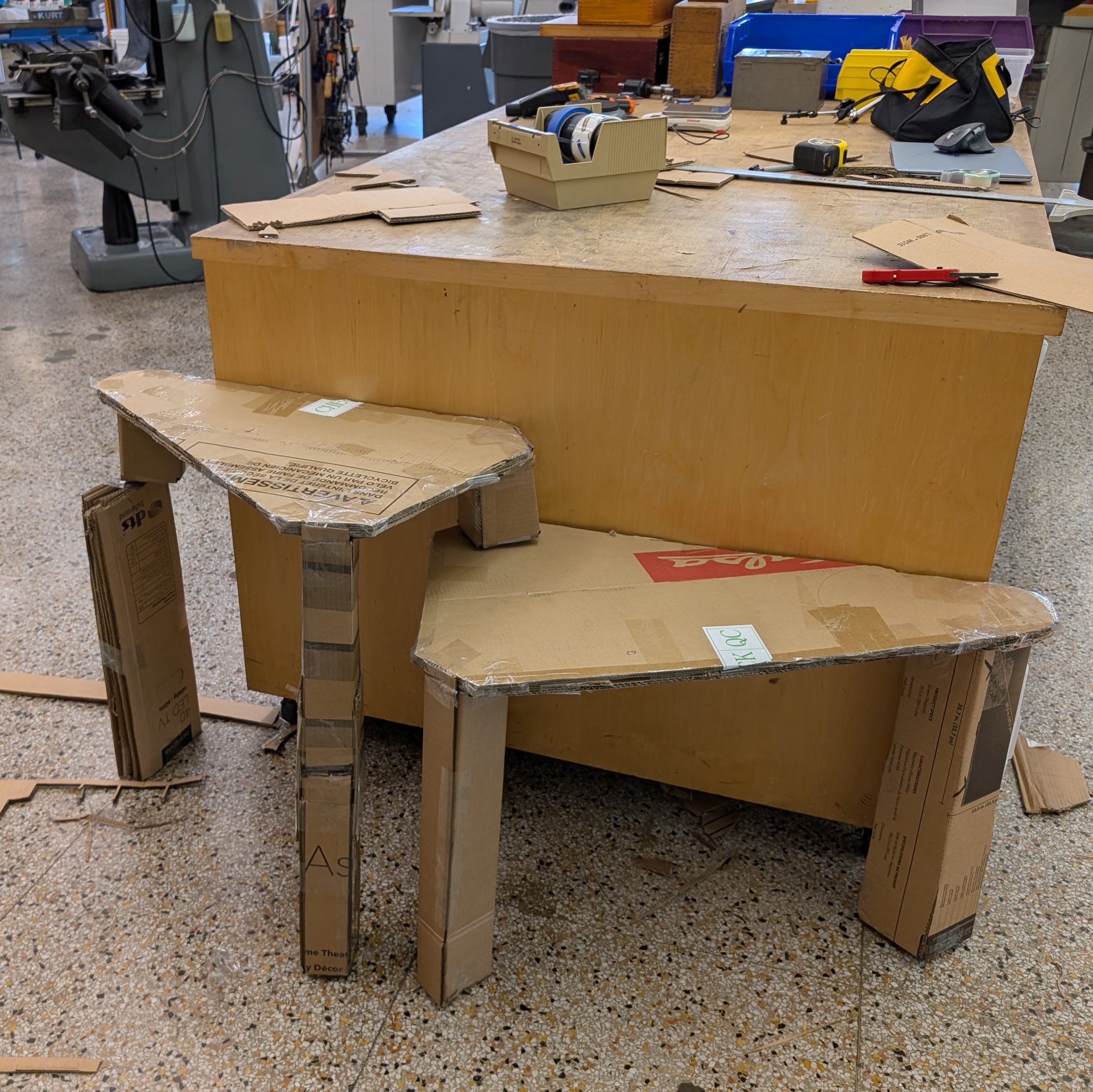
A full-size cardboard prototype acted as proof of concept while also acting as my actual bedside table, providing insight into the table’s dimensions.
The playful nature of the table became even more apparent with a full-sized version on hand.
Welding
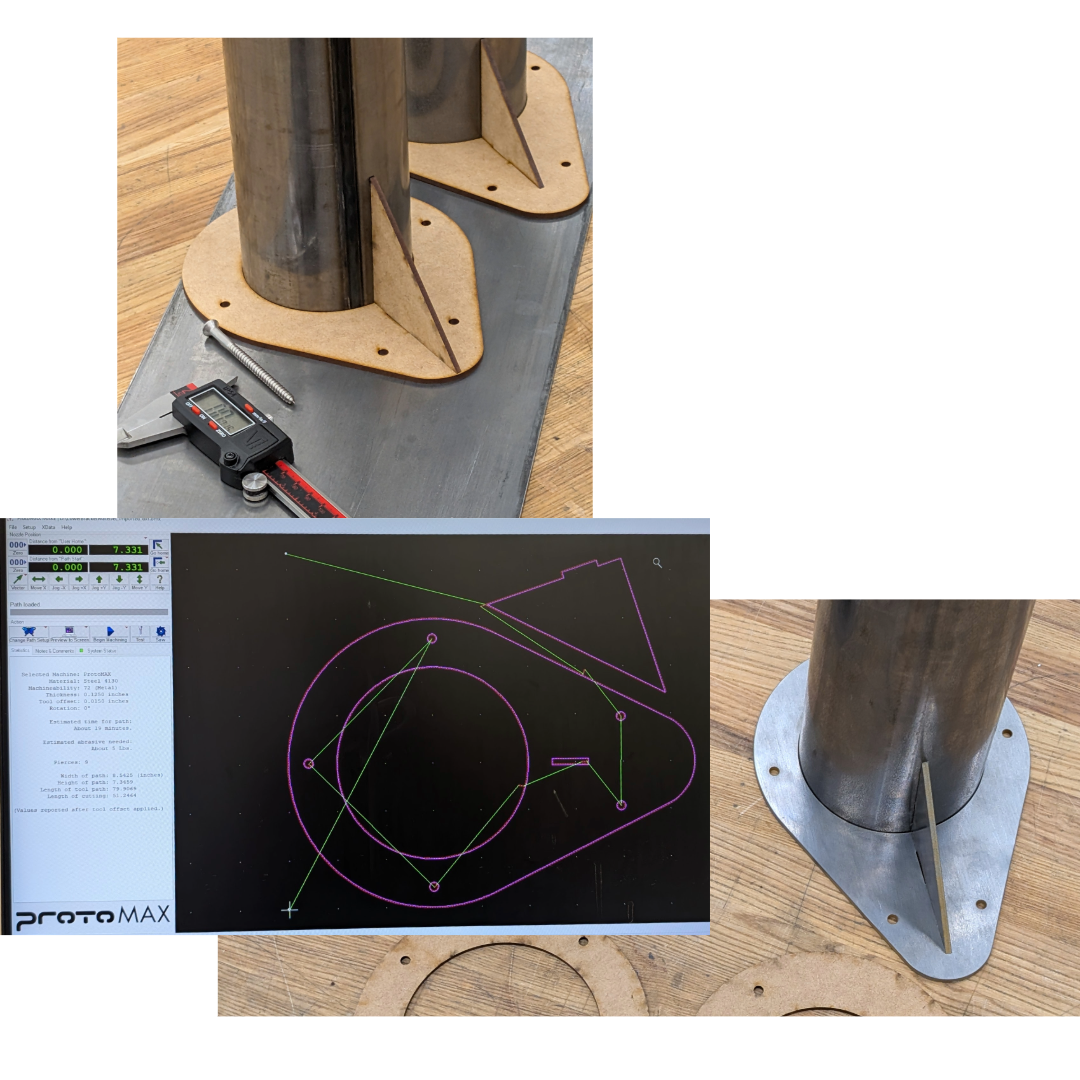
The brackets for the metal legs were water jet with dimensions carefully transferred from the laser cutter to aid in welding.
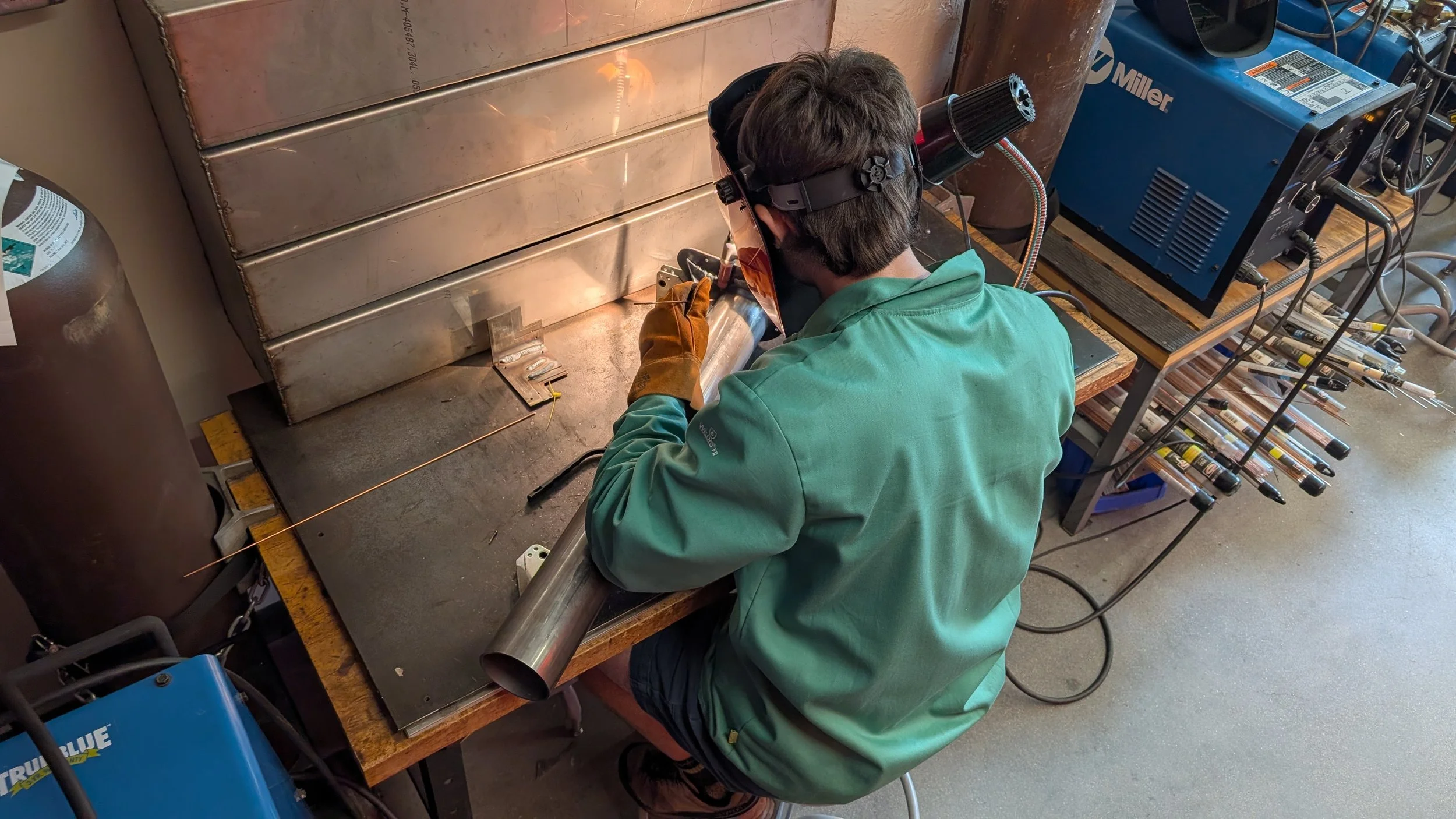
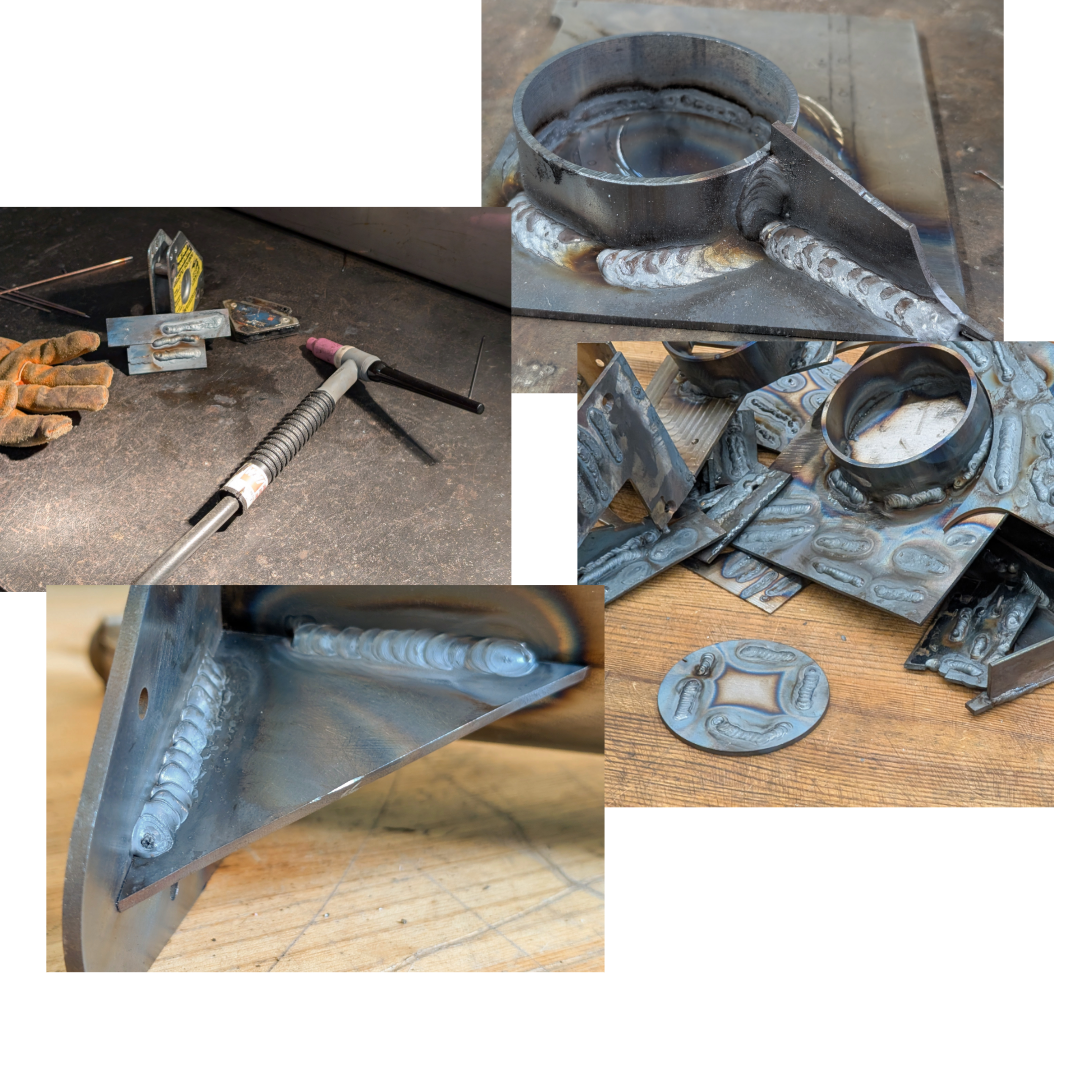
I learned both MIG and TIG over the course of 3 weeks. I decided on TIG for this project for its clean weld bead and minimal post processing.
While I would not consider myself a profressional, I am proud to have a new skill under my belt.
Woodworking
All lumber was purchased 2s and milled start to finish, from jointer to planar to table saw. Soft maple was chosen for its combination of cost, ease of use, and durability.
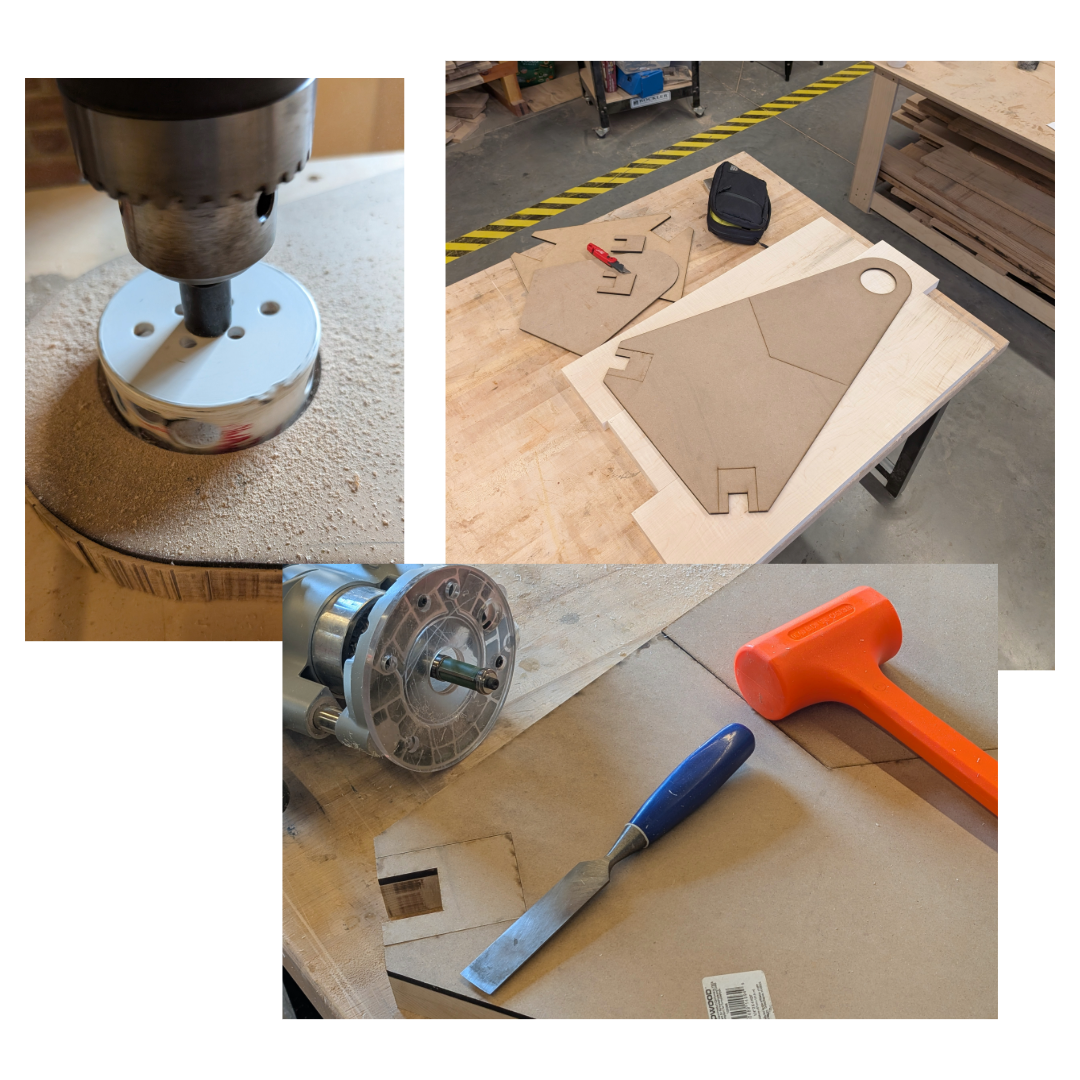
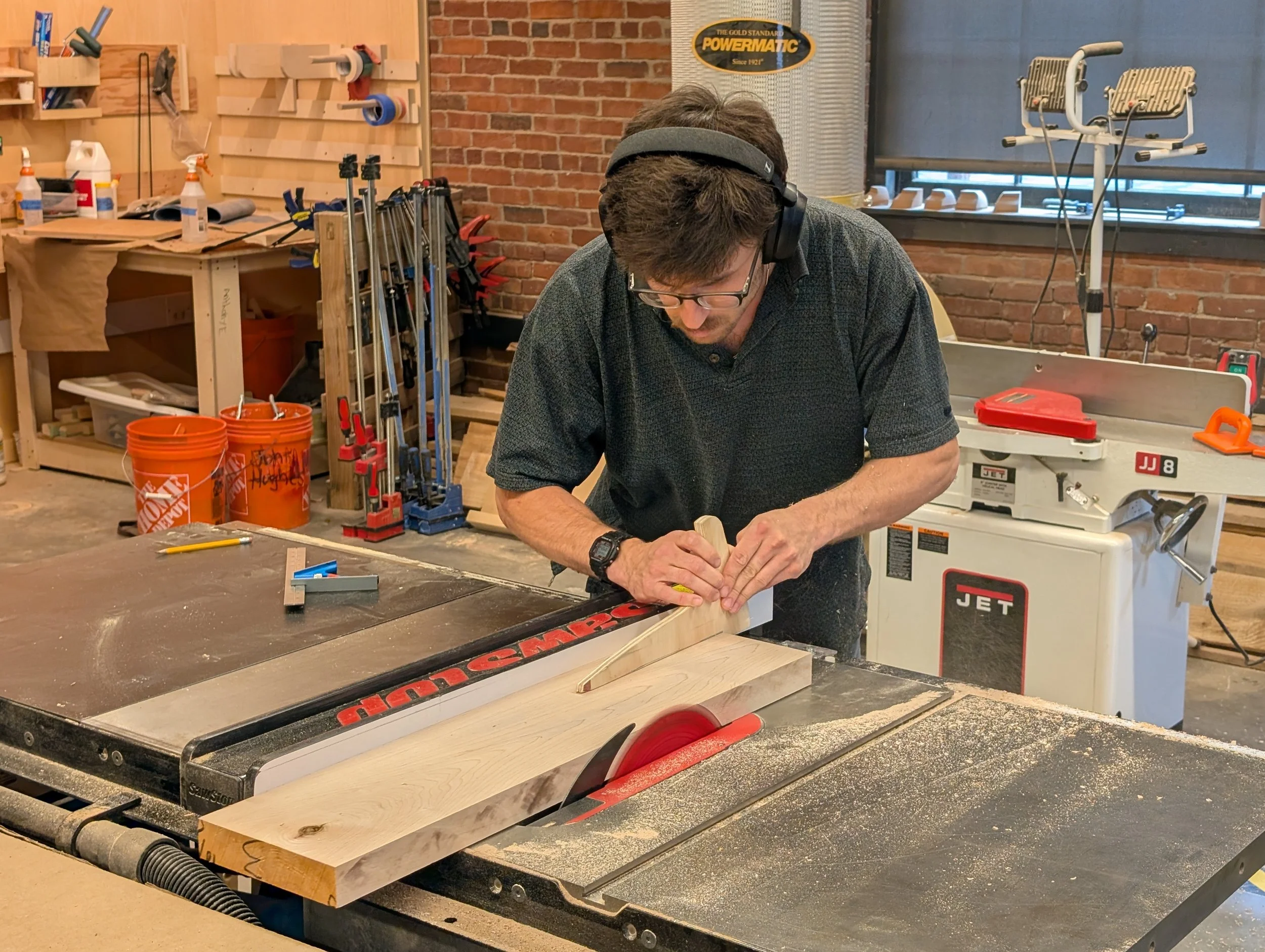
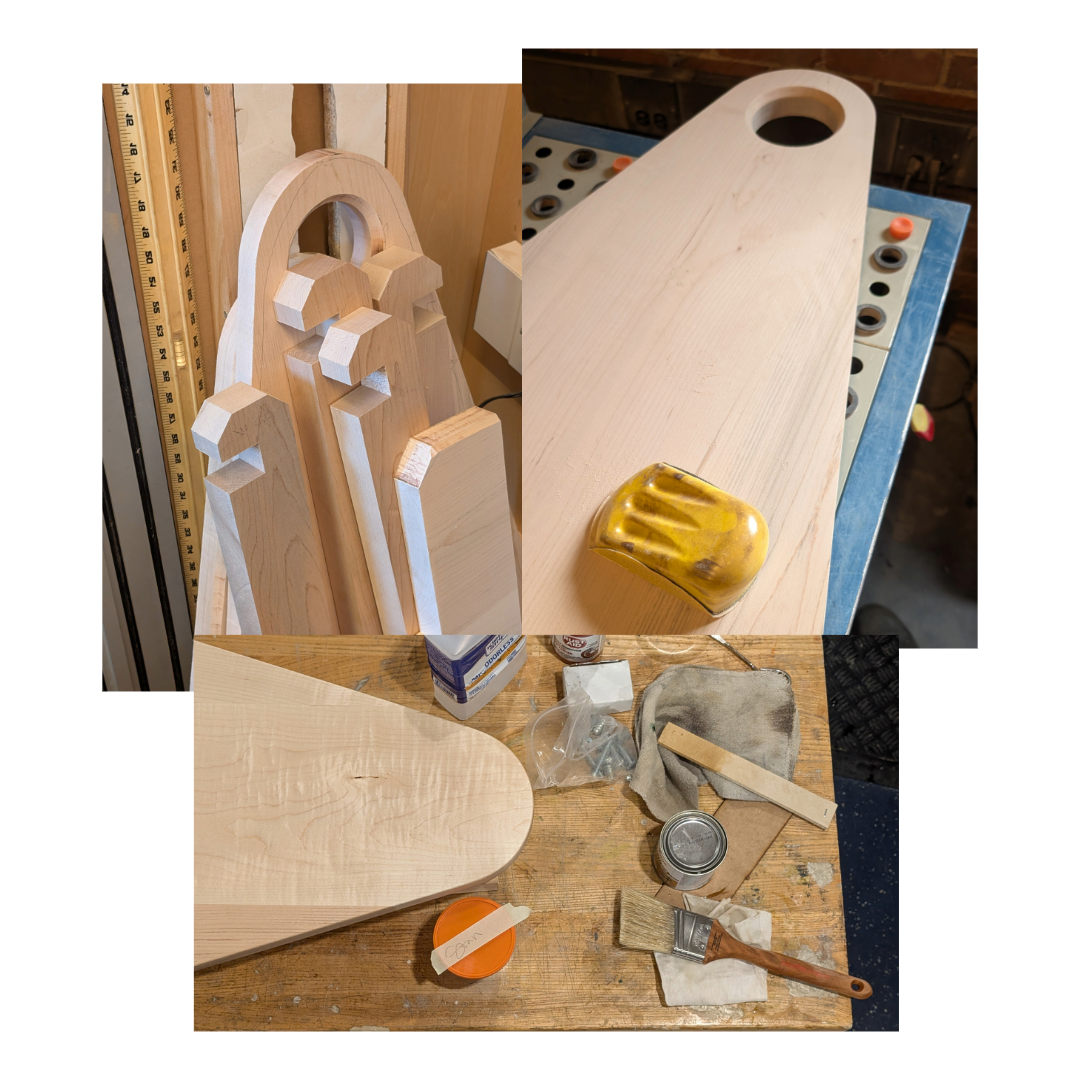
Finishing the wood proved the most arduous step: hours upon hours of sanding and a week stint had me eagerly awaiting the final result
A laser cut template and flush trim router were used to create the tables shape.
A chisel was used to square off the corners, providing a perfect friction fit for the legs
Details
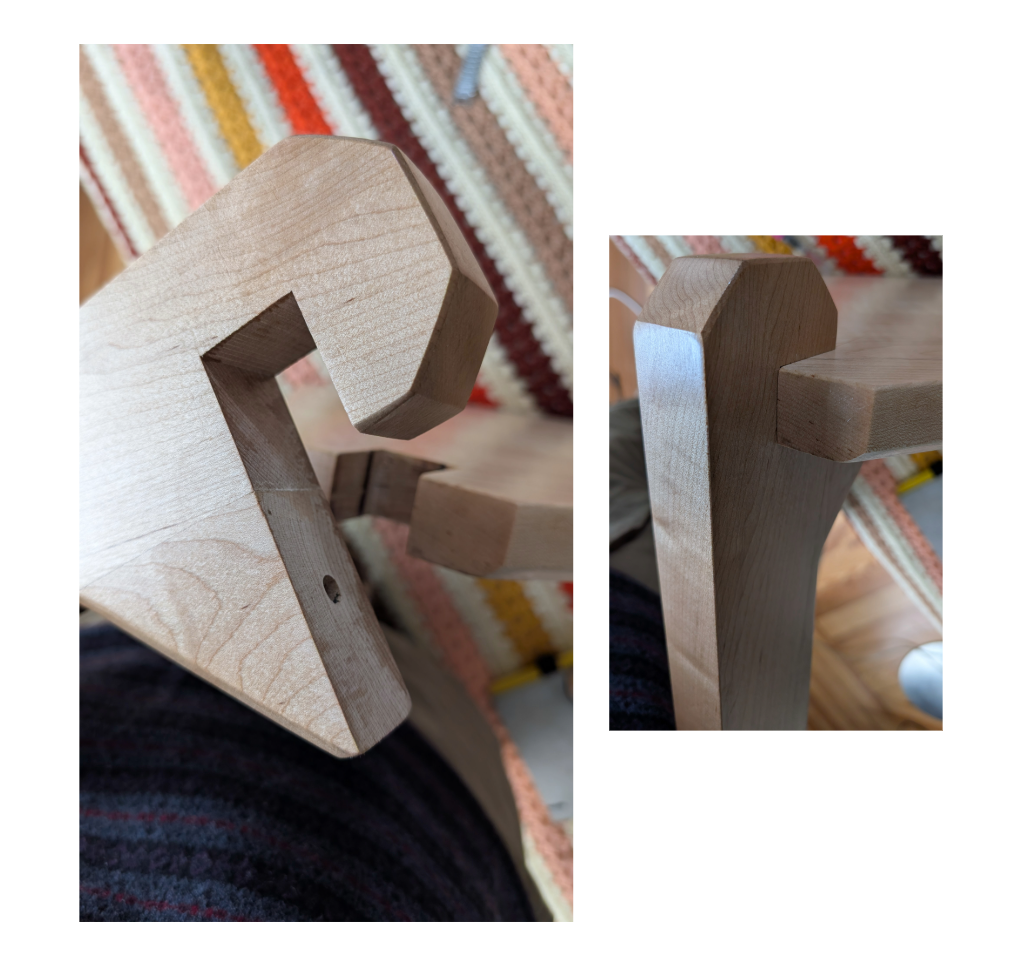
The Joinery proved close enough for a toolless assembly
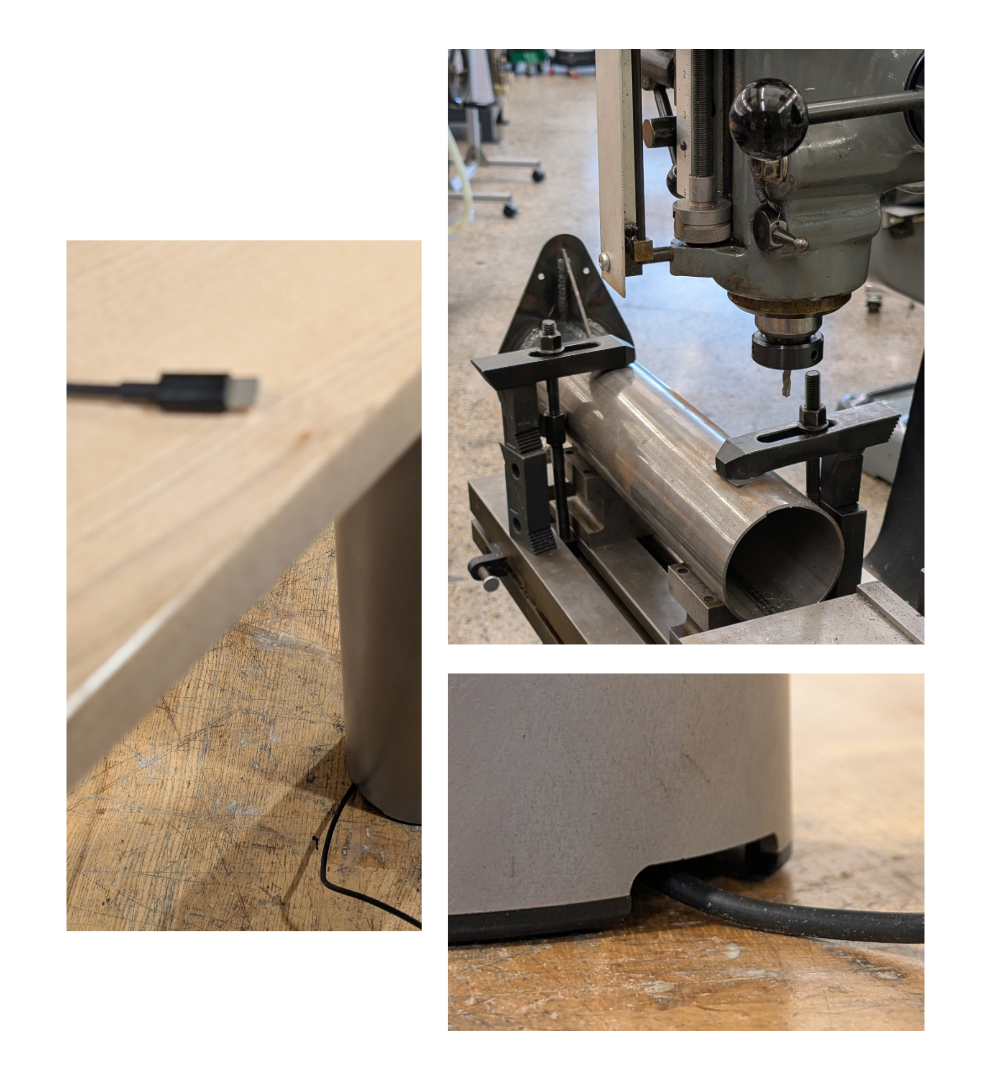
A slot in the lower leg hides cable routing allowing night time phone charging
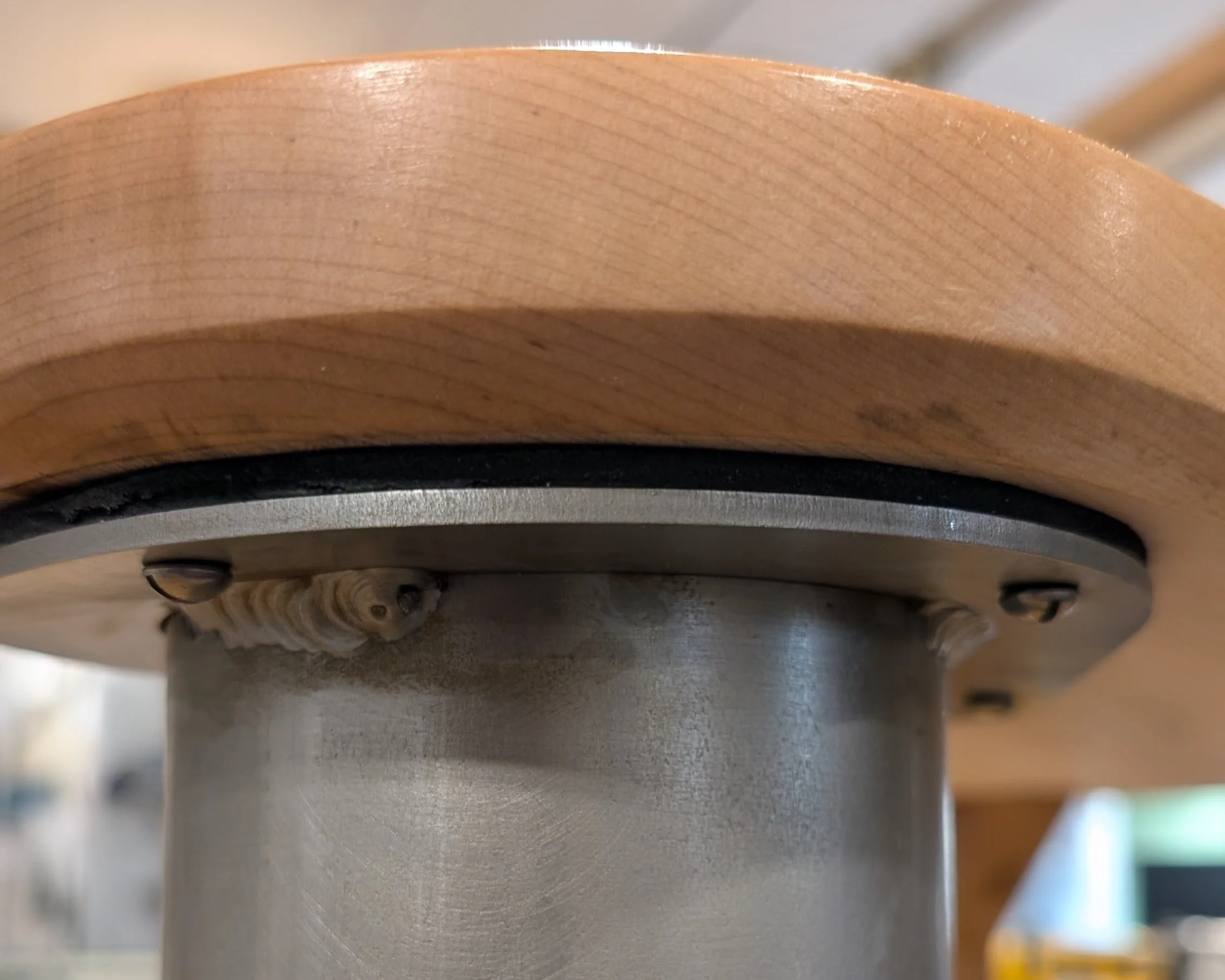
Warpage from welding was compensated for by the inclusion of water jet rubber gaskets made of non-slip stair covers